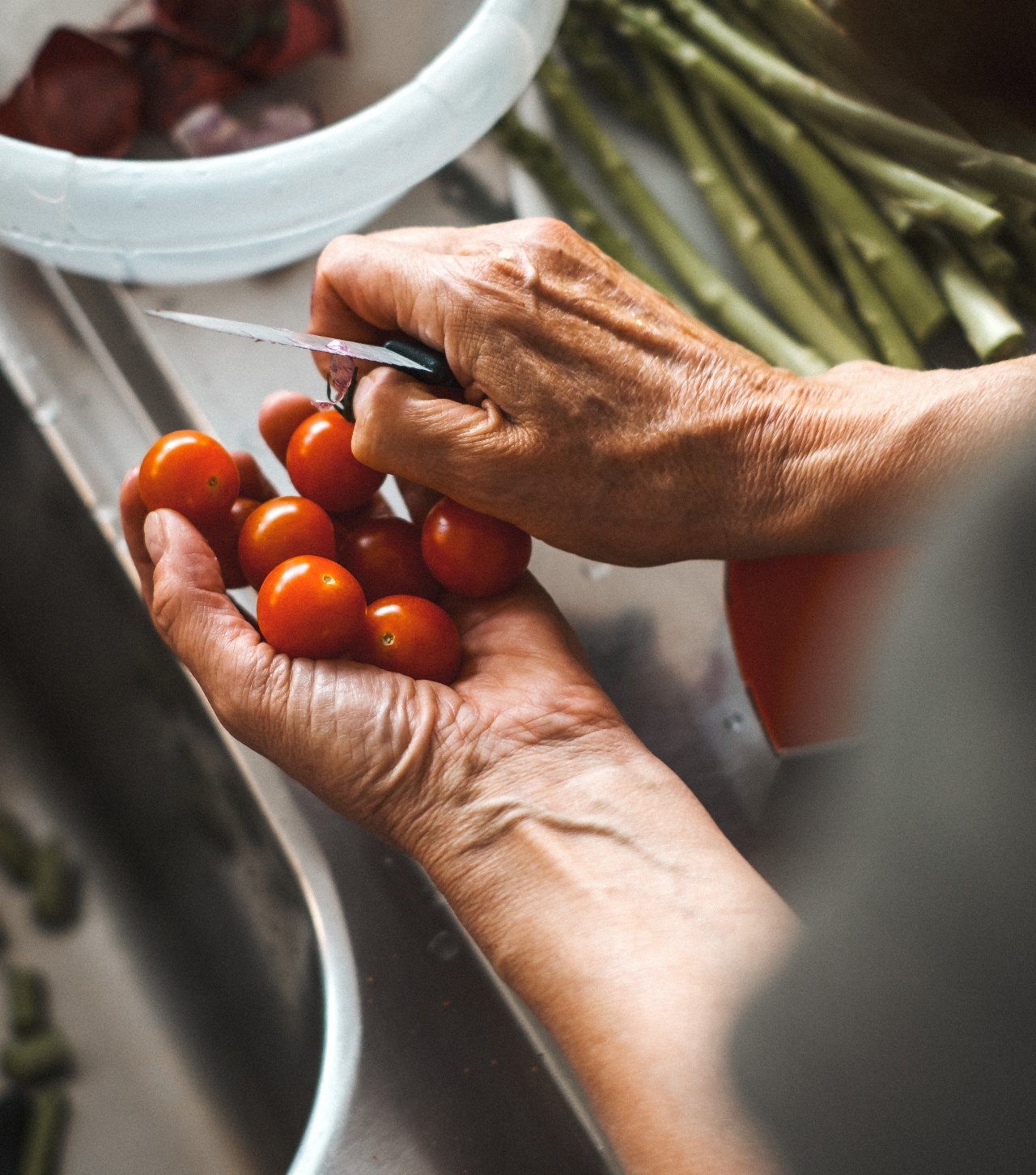
“A whole set of values comes with fast food: Everything should be fast, cheap and easy; there’s always more where that came from; there are no seasons; you shouldn’t be paid very much for preparing food. It’s uniformity and a lack of connection.”
Alice Waters
Over many generations, our connection to food, to land, and to each other has evolved. Today, in an era defined by sprawling urban ecosystems and capitalist convenience, many Western societies are more disconnected from their food than ever before.
We live in a world where a growing number of people no longer know how to cook. Where food is delivered by algorithm, not made by hand. Where “healthy meals” arrive neatly packaged at our doors—no skills or awareness required. It is easy, cheap, fast… and empty.
But with that convenience comes disconnection. Eating has always been a social ritual. A way to gather, to express care, to share stories, and to honour the land that sustains us. When we devalue how food is grown, prepared, and shared, we weaken these threads of connection.
A report by La Trobe University’s Community Planning and Development Program (2010) argues that local food systems can bring substantial long-term benefits to communities. Though they may come at a higher short-term cost, they offer fresh, nutritious food, fewer food miles, reduced environmental impact, stronger local economies, and deeper community ties.
Yet, in modern society, sacred things are becoming scarce. Everything is available all the time. Our wants masquerade as needs. We no longer ask where our food comes from—we simply expect it. The very system that feeds this demand profits from our detachment.
Time is of the essence, we’re told—so we rush. We multitask. We reheat. We scroll while we eat.
And if something isn’t immediately available or priced according to its true cost—its seasonality, its craftsmanship, its labour—we call it overpriced. Organic produce becomes a luxury. Freshness is a status symbol. Communities with limited food literacy are left undervalued and underserved, while producers and workers are underpaid and unseen.
We must ask: what is lost when food becomes just another product?
What becomes of culture when its most sacred rituals are forgotten?
To reclaim food is to reclaim something human. Something rooted. Something sacred.
 SACRED THINGS