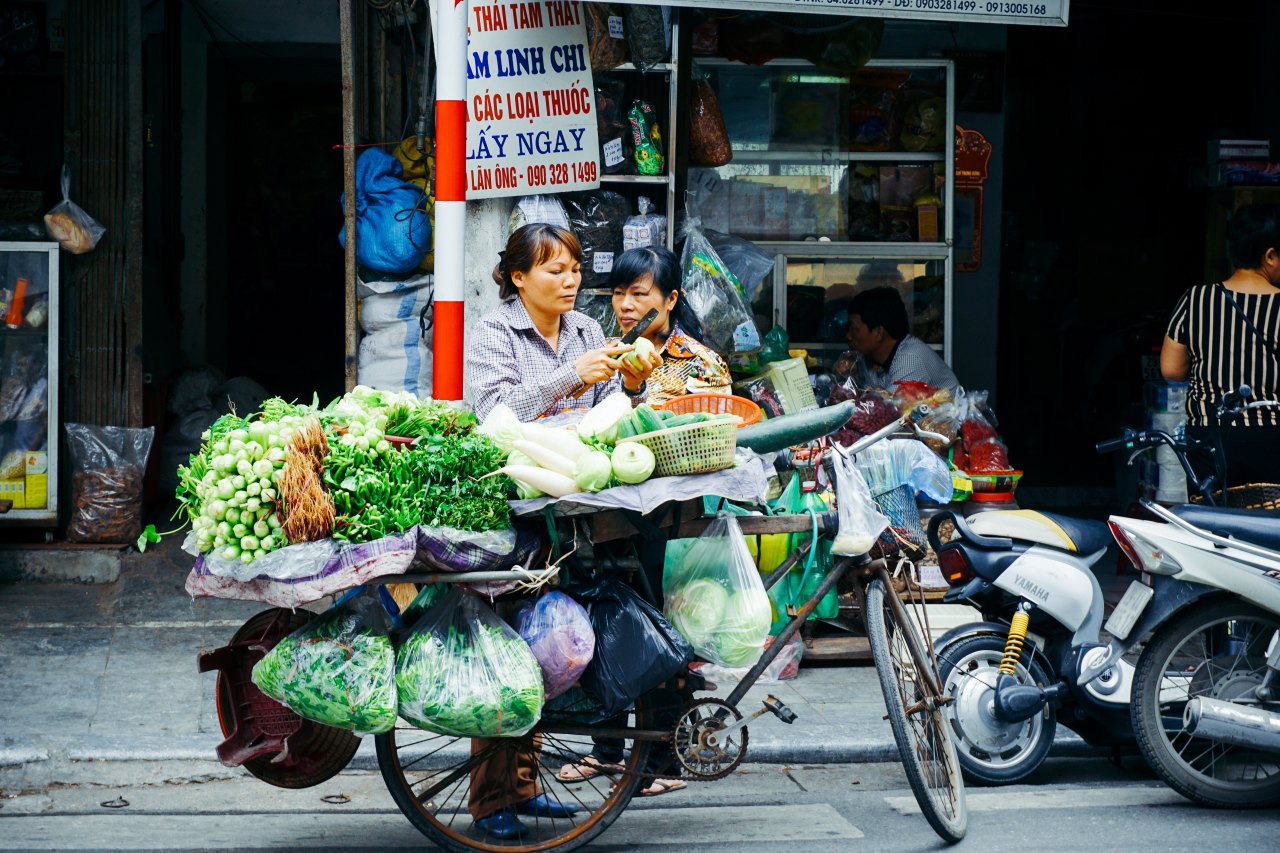
I recently took time to reflect.
I’ve always been fascinated by travel—specifically, the unique relationships between food, land, and local people. These moments of cultural exchange are vibrant, layered, and deeply human. In a foreign country, even something as simple as finding a meal becomes a full-sensory experience: sights, smells, sounds, and flavours that challenge your habits and expand your mind.
Over the years, I’ve spent countless late nights with French and Italian colleagues, deep in conversation about the roots of their cuisines and the passion they carry for food as a form of identity. I’ve shared meals at Ramadan festivals, broken bread with Muslim friends, travelled through Asia tasting street food, or explored new corners of my own country. In each case, I’ve felt something simple but profound: food, culture, and land are not separate—they are interdependent.
But more recently, my travels have presented a troubling contrast. In parts of Asia where I once sat on plastic stools sipping tea and warm beer, I now find high-end cocktail bars serving Negronis made from imported spirits, poured over enormous ice cubes into crystal glassware by bartenders dressed like 1920s gangsters. This transformation happened in less than five years—driven by global beverage corporations seizing an emerging market hungry for status and escapism.
The shift is not just aesthetic. It’s cultural, and it’s systemic.
As economies become more globally integrated, upward mobility is often accompanied by a longing to consume like the West. In the process, something gets lost: the uniqueness, the biodiversity, the traditions that give food meaning beyond flavour.
At the same time, technology continues to widen the gap between people and the land. The rise of 3D-printed meats, packaged convenience meals, and algorithm-driven food delivery systems further erode our relationship with ingredients, preparation, and origin. We now live in a world where highly processed food is more accessible than untreated vegetables—a reality as absurd as it is dangerous.
Convenient? Yes. Globally consistent? Absolutely.
Culturally relevant? Not at all.
We are witnessing the erosion of biodiversity and the monopolisation of taste. Food, once a cultural fabric woven into rituals, stories, and seasons, has become just another product—consumed quickly, photographed for validation, then forgotten.
So I ask: if this is where we are now—with industrialised food systems, diluted traditions, and transactional eating—what does the future hold for our cultures?
In a time of growing social epidemics—loneliness, disconnection, anxiety—could the solution lie not in new technologies, but in restoring our relationship with food and the land?
My belief is that food remains one of our last shared rituals that connects us directly to land, people, and culture. In a world built from concrete, driven by algorithms, and obsessed with efficiency, food is still a sacred act: a time to rest, to share, to connect, and to give thanks.
I claim that people, food, land, and culture are all interlinked and interdependent. When those relationships fracture, we risk fracturing something essential about what it means to be human.
 SACRED THINGS