
“The child who has become master of his acts through long and repeated exercises, and who has been encouraged by the pleasant and interesting activities in which he is engaged, is a child filled with health and joy and remarkable for his calmness and discipline.”
— Maria Montessori
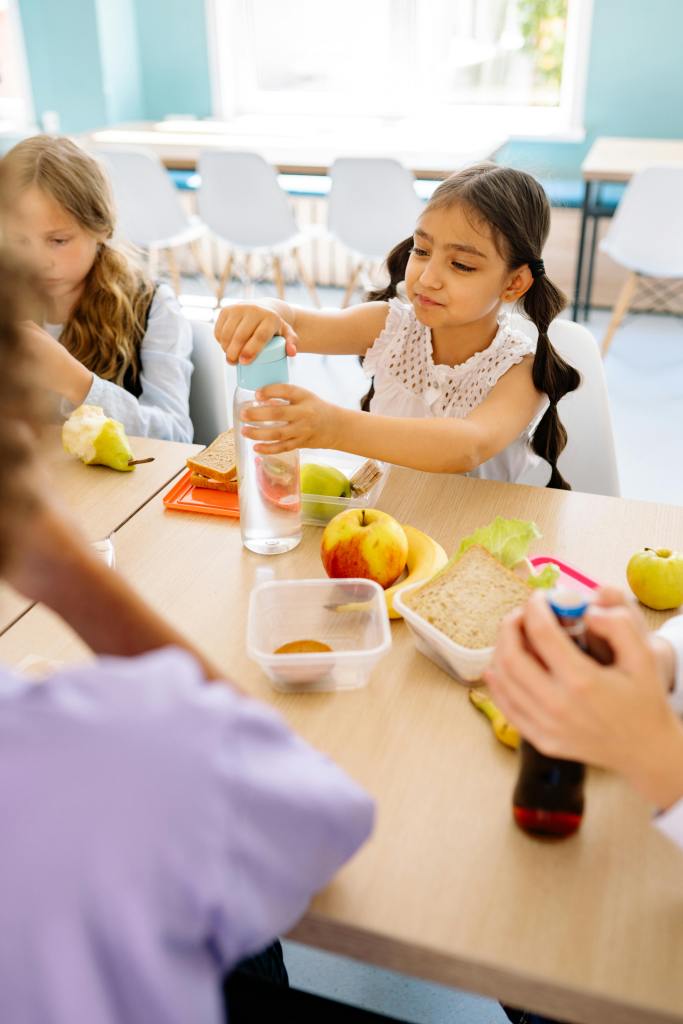
In all my thinking about food and its connection to land, ritual, and identity, I keep coming back to the table—not the gourmet table or the restaurant table, but the small wooden one in the corner of the classroom.
Maria Montessori understood the power of food as more than sustenance. She saw the act of preparing and sharing meals as a cornerstone of practical life—something that teaches grace, order, patience, independence, and respect. To set the table was to care for your environment. To serve a friend was to build empathy. To clean up was to honour the cycle. These weren’t side lessons. They were the lesson.
Today, in many schools, children eat quickly, quietly, and often alone. Lunch is managed more than it’s experienced—packaged snacks on staggered breaks, eaten between bells or at play. There is no time to prepare, to wait, or even to truly taste. And yet we wonder why children lack focus, regulation, or meaningful connection to their environment.
In my own classroom, we’ve introduced a weekly ritual we now call Focaccia Duty. Each week, a pair of children take on the task of preparing dough from scratch. They’ve learned the process over time—measuring, kneading, shaping, topping—and while it’s not always perfect, it’s always purposeful. There’s a quiet pride in their movements, a rhythm in how they work together.
On Fridays, the focaccia is baked and served to the entire class. The children arrange the tables into one long dining table, creating a shared space that feels distinct from the rest of the week. They are offered slices of warm focaccia to go with their own lunch—a gesture that feels both ordinary and sacred. After eating, they wipe down the tables, reset the classroom, and return the furniture to its place, independently and with care.
Friday lunch has become something the children look forward to. Not just for the bread, but for the ritual. For the way it feels to sit together, share something handmade, and contribute to something bigger than themselves. Grace and courtesy aren’t taught in a single lesson—they’re practiced here, week after week, through action, through service, through repetition.
Alice Waters, founder of the Edible Schoolyard, once wrote that “the values we learn around food—nourishment, stewardship, community—are values that shape our lives far beyond the plate.” In my experience, this couldn’t be more true. Focaccia Duty isn’t just a cooking task. It’s a quiet cultural centrepiece. A rhythm. A moment of meaning.
Michael Pollan has said that “the garden suggests there might be a place where we can meet nature halfway.” I think the classroom table offers the same invitation: a place where we meet each other halfway. Where we slow down long enough to see one another, to share, to serve, to receive.
There is something radical about inviting food back into education. It shifts the focus from performance to presence, from outcome to process. It teaches that nourishment is not something to grab on the go, but something to prepare, to share, and to honour.
What could be more educational than that?
In a world increasingly engineered for speed and convenience, the classroom table may be one of the last sacred things worth protecting.
 SACRED THINGS